HIPAA-Compliant Database Design for Custom EMR Architectures
Z
Zycic Team
June 29, 20261 min read
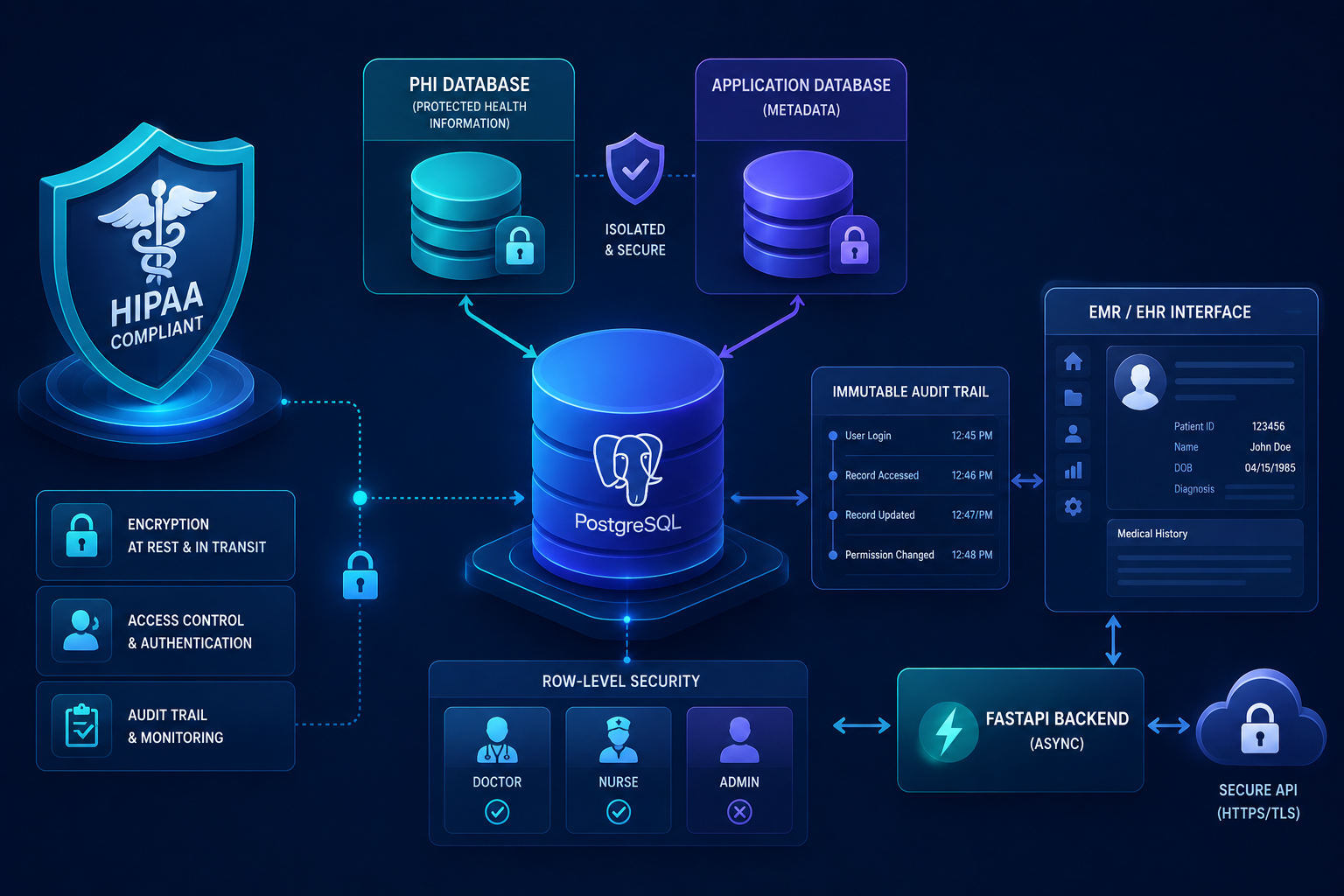
When building custom Electronic Medical Record (EMR) and Electronic Health Record (EHR) systems, data security is not an afterthought—it is the foundational requirement. Achieving strict HIPAA compliance requires granular security measures applied at the database layer.
An enterprise healthtech architecture must enforce strict isolation between Protected Health Information (PHI) and standard application metadata. This is typically achieved using dedicated schema separation or isolated multi-tenant databases in PostgreSQL. Additionally, every record access must be explicitly logged via an immutable audit trail. Implementing row-level security ensures that healthcare providers can only access data belonging to patients within their specific clinical workflow.
By pairing modern asynchronous backend frameworks like Python and FastAPI with robust encryption protocols at rest and in transit, software engineers can deliver scalable clinical software that balances rapid performance with absolute regulatory compliance.
#Healthcare Technology
Z
Zycic Team
Zycic Expert Contributor
Dedicated to delivering high-performance web development and AI-driven solutions.